

The soggy bit of paper that became BloomOS
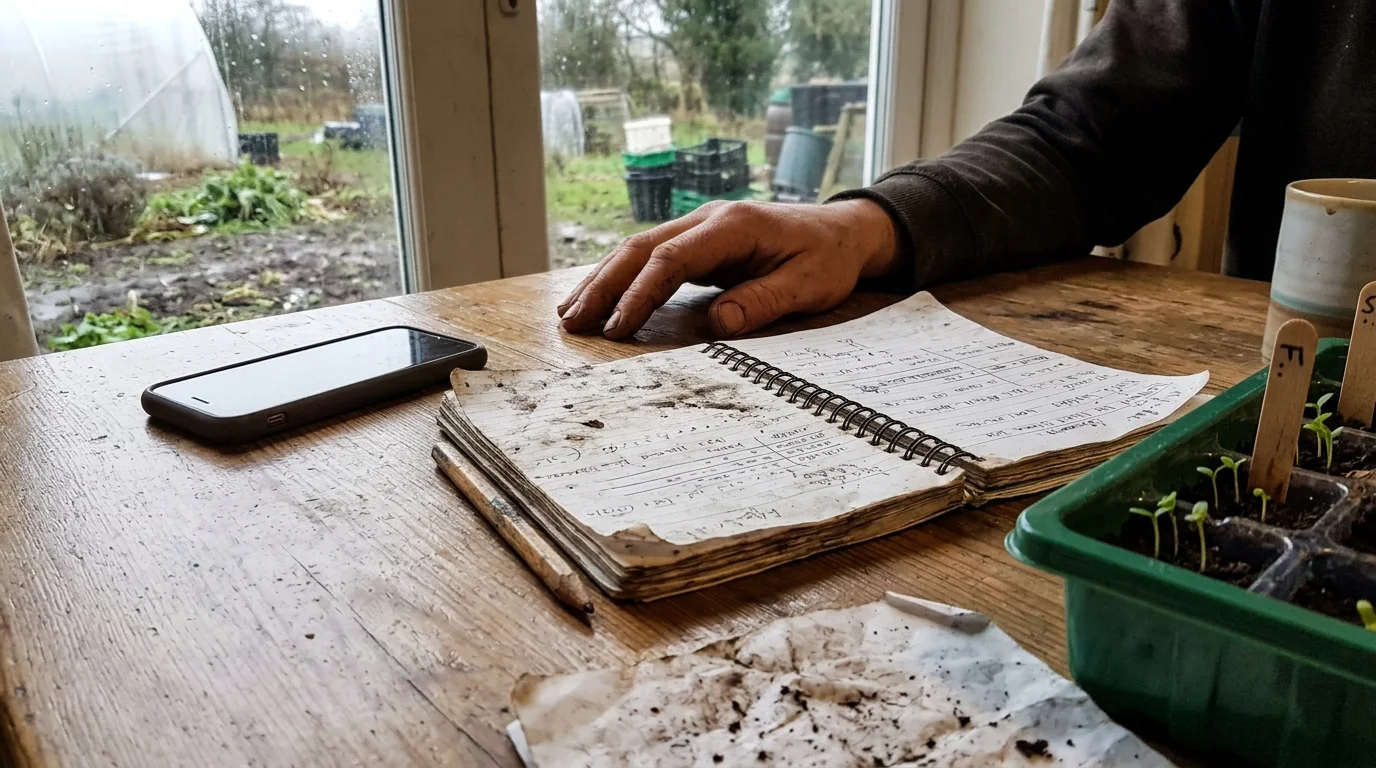
On a cold, wet Sunday in February 2026 I came in from the cutting garden for lunch, covered in mud, holding a soggy bit of paper with my seedling counts scribbled on it. I put it down on the kitchen table and said to Simon, “we need an app.”
Simon is a designer, and his answer was, “If you can dream it, I can build it.” He started designing that afternoon. That app is now BloomOS, flower farm software for small cut flower growers, and this garden is where every part of it gets tried first.
Why paper wasn’t enough
Growing the flowers was never the hard part. Keeping track of them was. Seedling counts on scraps of paper, orders in messages, prices in my head. At the end of a busy week I knew I had been busy, but not which beds had paid their way and which ones only looked pretty.
I wanted something I could use in the beds at five in the morning, with wet hands and no signal, that would turn what I cut into orders, invoices and numbers I could actually learn from.
How the garden runs on it now
All 28 of our beds are mapped in BloomOS, with this year’s 25 varieties planned into them. I logged my first cut in it on 11 June, and our first order and invoice went through it on 4 August, straight into our accounts. Every cut goes into my phone as it goes into the bucket, so by breakfast I know what is spare before anyone asks.
Free for other growers too
BloomOS is made for small flower farms and farmer-florists like us, in the UK and the US, and there is a free plan. Some of the tools need no sign-up at all: a free crop planning spreadsheet, a succession planting calculator and a library of cut flower varieties with stem length and vase life for each.
If you grow flowers to sell, I’ve written the longer story on the BloomOS blog: how Little Devon Flower Garden runs on BloomOS.
And if you just come here for the flowers, nothing changes. They are still grown in Cheriton Fitzpaine, no dig, peat free and without chemicals. Grown, not flown.